

Knowledge Is the First Step
We support families dealing with a range of paediatric liver conditions. Below is an overview of the conditions we most commonly encounter, and what families need to know about each one.

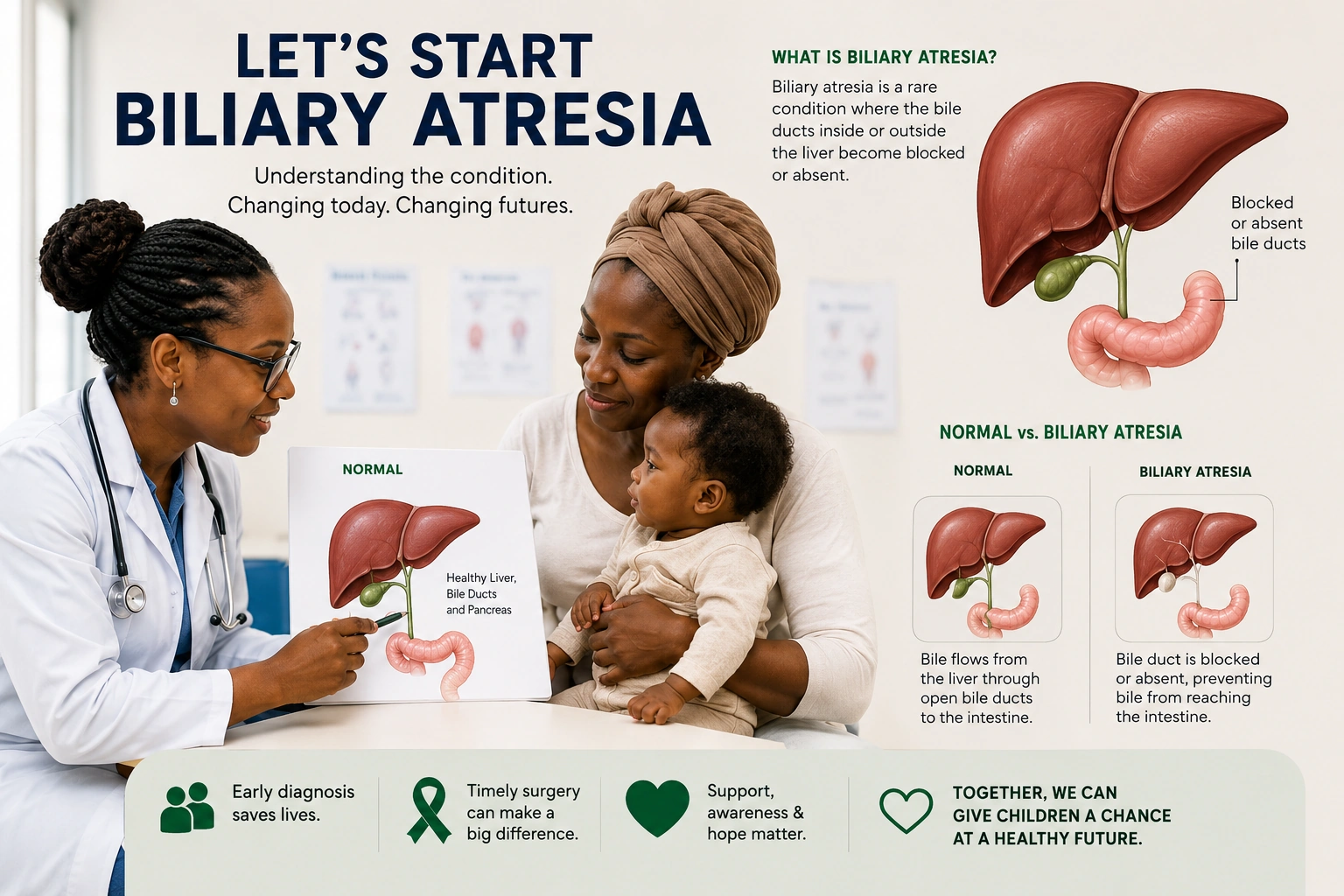
Biliary Atresia
Biliary Atresia is the most common reason for paediatric liver transplants in South Africa. It is a condition where the bile ducts - the tubes that carry bile from the liver to the digestive system - are blocked or absent. Without early intervention, bile builds up in the liver and causes severe damage. The Kasai procedure, performed in the first weeks of life, is the primary treatment. Early diagnosis is critical. If your newborn still has jaundice after two weeks, speak to a healthcare provider immediately.

Hepatitis in Children
Hepatitis is inflammation of the liver, and it can affect children of any age. Some forms are caused by viral infections and are preventable through vaccination - particularly Hepatitis B, which can be passed from mother to child at birth. Good hygiene, routine vaccination, and early medical attention all play a role in protecting children. If your child is showing signs of liver dysfunction, do not wait to get it checked.

Liver Transplantation in South Africa
For children whose liver disease has progressed beyond what other treatment can manage, a transplant may be the path forward. South Africa has world-class paediatric liver transplant facilities. The primary centres are Red Cross War Memorial Children's Hospital in Cape Town and Wits Donald Gordon Medical Centre in Johannesburg. We help families understand the transplant process, what to expect on a waiting list, and the option of living donation.
Know the Signs
Warning Signs to Watch For
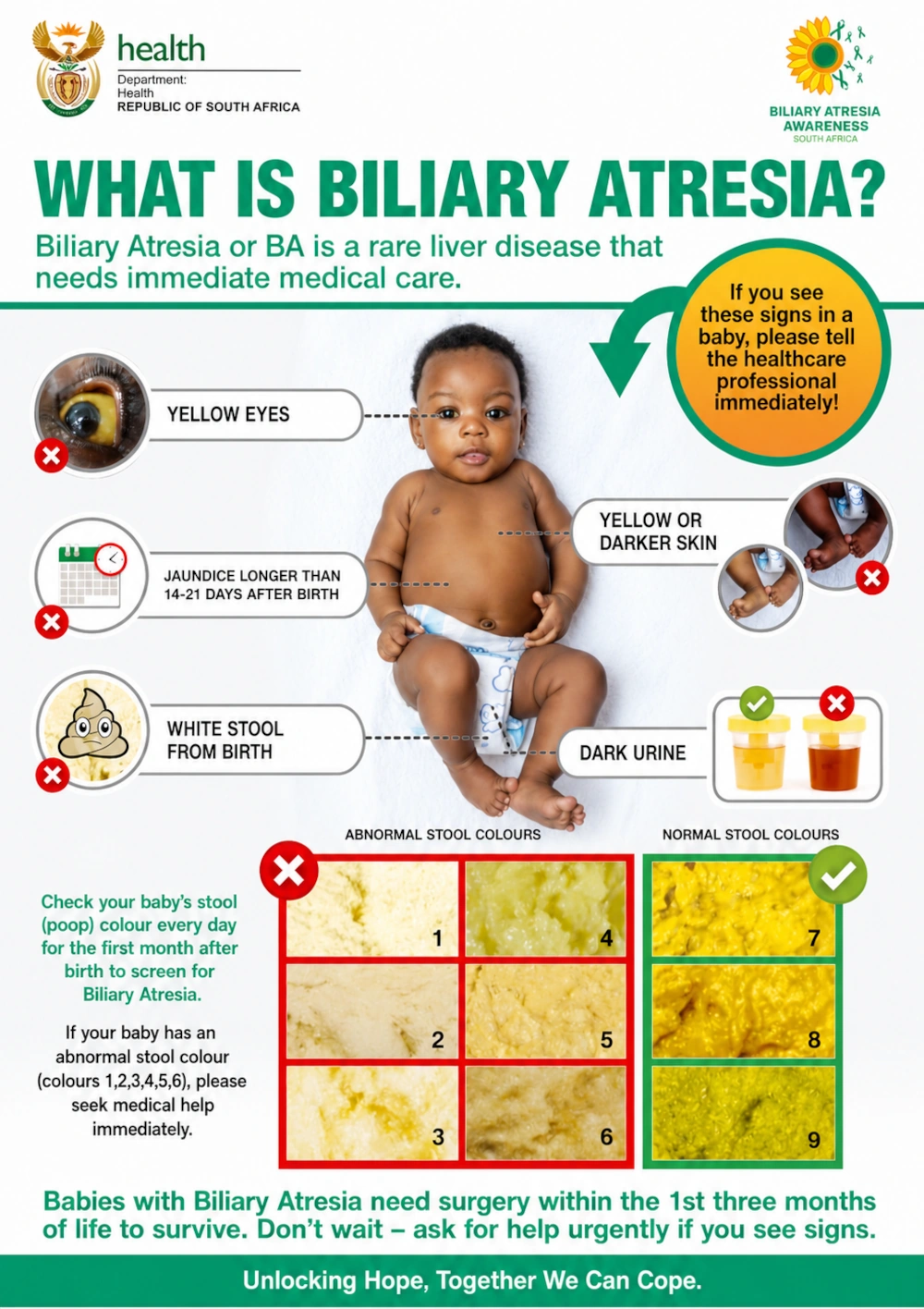
Do not wait to see if it resolves on its own. With liver conditions in infants, time matters.
Contact Us
Useful Resources
The following organisations provide additional information on how to register as an organ and tissue donor (ODF) and more information about liver diseases NdoH.
Organ Donor Foundation
National Department of Health